
 TIG Welding
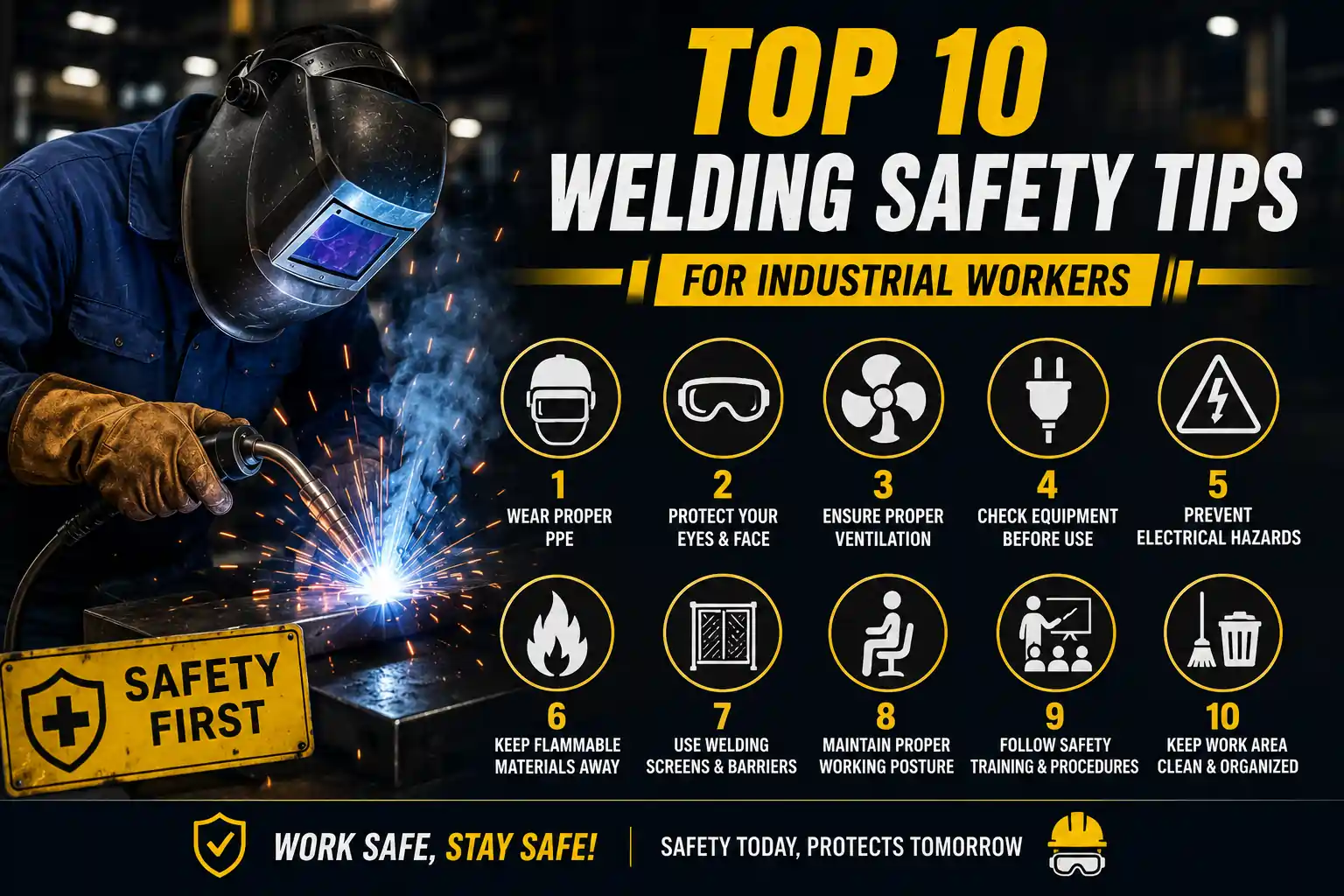
Top 10 Welding Safety Tips for Industrial Workers
Welding is an essential process in construction, fabrication, manufacturing, and industrial maintenance. While welding offers numerous benefits, it also involves risks such as burns, electric shocks, harmful fumes, eye injuries, and fire hazards. Following proper safety practices is crucial for protecting workers and maintaining a safe work environment. In this guide, we'll discuss the top 10 welding safety tips that every industrial worker should follow. 1. Always Wear Proper Personal Protective Equipment (PPE) Personal Protective Equipment is the first line of defense against welding hazards. Every welder should wear: Welding helmet with proper shade lens Flame-resistant clothing Safety gloves Safety boots Safety goggles Ear protection when required Using the right PPE significantly reduces the risk of burns, sparks, and eye injuries. 2. Protect Your Eyes and Face The intense light produced during welding can cause serious eye damage, commonly known as "arc eye" or welder's flash. Always use a certified welding helmet with the correct lens shade and ensure that nearby workers are protected with welding screens or curtains. 3. Ensure Proper Ventilation Welding generates fumes and gases that may be harmful when inhaled over long periods. To maintain a safe working environment: Use exhaust ventilation systems Work in well-ventilated areas Use fume extraction equipment Wear respiratory protection when necessary Proper ventilation helps reduce exposure to hazardous fumes. 4. Inspect Equipment Before Use Before starting any welding job: Check cables and connectors Inspect electrode holders Verify machine settings Ensure gas hoses are leak-free Replace damaged components immediately Regular inspections help prevent equipment failures and accidents. 5. Prevent Electrical Hazards Electric shock is one of the most serious welding risks. To minimize the danger: Keep equipment properly grounded Avoid working in wet conditions Wear dry gloves and clothing Inspect electrical connections regularly Follow manufacturer safety instructions Safe electrical practices can prevent severe injuries and fatalities. 6. Keep Flammable Materials Away Welding sparks can travel several meters and ignite nearby combustible materials. Before welding: Remove flammable liquids Clear paper, wood, and cloth materials Keep fire extinguishers nearby Follow workplace fire safety procedures Maintaining a clean work area reduces fire risks significantly. 7. Use Welding Screens and Barriers Welding arcs emit ultraviolet (UV) and infrared (IR) radiation that can affect nearby workers. Installing welding screens and protective barriers helps: Prevent accidental eye exposure Improve workplace safety Create designated welding zones This simple step protects everyone in the work area. 8. Maintain Proper Working Posture Poor posture can lead to fatigue, muscle strain, and long-term injuries. Industrial workers should: Use adjustable workstations Avoid awkward positions Take regular breaks Use ergonomic equipment whenever possible Comfortable working conditions improve productivity and safety. 9. Follow Safety Training and Procedures Every welder should receive proper training before operating welding equipment. Workers must understand: Machine operation procedures Emergency response plans Fire prevention techniques PPE requirements Workplace safety regulations Continuous training helps reduce workplace accidents. 10. Keep the Work Area Clean and Organized A cluttered workspace increases the risk of slips, trips, and accidents. Good housekeeping practices include: Organizing tools properly Removing scrap materials Securing cables and hoses Cleaning welding debris regularly A clean workspace promotes safer and more efficient operations. Common Welding Hazards to Watch For Industrial workers should always remain alert to: Electric shock Burns and hot metal contact Harmful welding fumes Fire and explosion hazards Eye injuries from arc radiation Noise exposure Falling objects in construction environments Understanding these hazards is the first step toward prevention. Conclusion Safety should always be the top priority in any welding operation. By following these 10 essential welding safety tips, industrial workers can reduce risks, improve productivity, and create a safer work environment. Investing in proper safety equipment, regular training, and workplace safety procedures not only protects workers but also enhances overall operational efficiency. Whether you are involved in fabrication, construction, manufacturing, or maintenance work, adopting safe welding practices is critical for long-term success. For high-quality welding safety equipment, PPE products, welding accessories, and industrial solutions, contact Optiweld Industry today.